9 Benefits of Studying Early Childhood Education and Care

benefits of studying early childhood education

Early Childhood Education and Care (ECEC) is more than just a career—it’s a profession that shapes the future. If you have a passion for working with children, pursuing a qualification in early childhood education can open doors to a meaningful and rewarding career. With the growing demand for early childhood teachers, the profession offers numerous benefits that extend beyond a regular salary. From the opportunity to make a lasting impact on children’s lives to the ability to enjoy job stability and career advancement, studying ECEC equips you with the skills and experience to thrive in a variety of fulfilling roles.

In this guide, we’ll explore the many benefits of studying Early Childhood Education and Care, focusing on career opportunities, skill development, and the powerful influence you can have on childhood learning. Whether you’re just beginning your journey or considering a career change, understanding the benefits of this field will help you make an informed decision and set you on the path to success.

What is Early Childhood Education and Care?

Early childhood education and care focus on the development, education, and well-being of children from birth to five years old. This stage is crucial as it lays the foundation for lifelong learning, social skills, and emotional intelligence. Professionals in this field work in various settings, including childcare centres, preschools, kindergartens, and even home-based care, where they engage with children through structured activities, play, and interaction.

A formal qualification, such as a Certificate III or CHC50121 Diploma of Early Childhood Education and Care, equips individuals with the skills to provide high-quality care, foster learning, and support children’s physical, cognitive, and emotional growth.

Why Study Early Childhood Education and Care?

1. High Demand for Early Childhood Educators

The demand for qualified early childhood educators is on the rise globally. Governments recognise the importance of early education in child development and learning experience, shaping future generations and leading to increased funding and job opportunities in the sector.

According to industry reports, the employment rate for childcare workers is expected to grow significantly by an average of 1.9 % per year in the coming years. This demand ensures job security and career stability for those entering the field.

2. A Fulfilling and Impactful Career

Working with young children is incredibly rewarding, not just in terms of emotional fulfilment but also in terms of the positive impact you can have on their development. The early years are essential for brain development, and by becoming an early childhood educator, you directly contribute to a child’s growth in ways that will last a lifetime.

You have the opportunity to shape children’s cognitive, emotional, and social skills during their formative years. By fostering a nurturing environment, you can help children learn essential life skills such as problem-solving, emotional regulation, and social interaction, all of which contribute to their future success.

3. Diverse Career Opportunities

One of the significant advantages of studying early childhood education is the broad range of career opportunities available. Graduates with a qualification in ECEC can pursue a variety of roles in different settings, such as:

  • Childcare Centers and Preschools: Working directly with young children, planning and implementing early learning activities, and fostering a positive, engaging environment.
  • Kindergartens: Helping children prepare for primary school by focusing on foundational literacy and numeracy skills.
  • Special Needs Education: Providing support to children with disabilities or developmental delays, ensuring they receive the education and care they need to succeed.
  • Policy and Advocacy Roles: Working with government agencies, non-profits, or advocacy organisations to influence policy and improve early childhood education on a larger scale.

These opportunities ensure that you’ll find a role that aligns with your skills and interests, whether you want to work directly with children, support other educators, or engage in policymaking.

4. Skill Development

In addition to the academic knowledge you gain, studying early childhood education equips you with a wide range of skills that are applicable in many areas of life and work. Some of the key skills you’ll develop include:

  • Communication: You’ll learn how to effectively communicate with young children, their families, and other professionals, ensuring that everyone involved in a child’s development is on the same page.
  • Leadership: Even if you’re not in a management role, you’ll take on leadership responsibilities by guiding children, helping them navigate social interactions, and mentoring other educators.
  • Problem-Solving and Critical Thinking: As an early childhood educator, you will face challenges daily. Whether it’s resolving a conflict between children or adapting a lesson plan to meet the needs of diverse learners, problem-solving is key to your success in the role.
  • Emotional Intelligence: Working with young children requires patience, empathy, and the ability to understand and respond to their emotional needs. Developing these emotional intelligence skills is essential for your professional growth and can positively affect your personal life as well.

5. Flexibility and Work-Life Balance

Many early childhood education roles offer flexible working hours, which can be particularly appealing to those seeking a better work-life balance. For instance, childcare centres and preschools often operate on shifts that allow you to work part-time or have your weekends free.

Additionally, many positions in the early childhood education sector align with school holidays, so you’ll have time off when children are on break. If you value flexibility and time for family or personal pursuits, this career offers the ideal work-life balance.

6. Job Satisfaction and Emotional Fulfillment

The emotional rewards of working with young children are immense. There is no greater satisfaction than watching a child reach a developmental milestone, whether it’s learning to write their name or successfully navigating a social interaction.

Your work as an educator will have a profound impact on the lives of children, and the bonds you form with the children you teach often lead to long-lasting relationships. Parents and families also appreciate the work you do, and many early childhood educators find the gratitude and appreciation they receive from families to be deeply fulfilling.

7. Growing Recognition for the Profession

As more studies highlight the importance of early childhood education, there is growing recognition of the role that early childhood educators play in society. Governments, educators, and families are beginning to place more excellent value on the work you do.

This shift has resulted in better salaries, improved benefits, and more opportunities for professional development. As the profession continues to gain respect, it’s becoming a more attractive and respected career choice.

8. Making a Positive Social Impact

The early years of a child’s life are essential for their future success, and early childhood education is one of the most effective ways to address educational inequality. Quality early childhood education programs provide children, particularly those from disadvantaged backgrounds, with the foundation they need to thrive in school and beyond.

By choosing a degree in early childhood education, you contribute to a more equitable society. You help to break down barriers and ensure that all children, regardless of their socio-economic status, have access to the education and support they need to succeed.

9. Opportunity for Growth and Advancement

Early childhood education offers plenty of room for growth. As you gain hands-on experience, you may move into higher-level roles, such as:

  • Lead Educator or Director: Overseeing the operations of a childcare centre or preschool and managing a team of educators.
  • Training and Mentoring: Sharing your knowledge and skills with new educators, providing guidance and support as they start their careers.
  • Specialised Roles: If you develop an interest in a specific area—such as special education, leadership, or curriculum design—you can pursue further qualifications or training to specialise in that area. 

These growth opportunities ensure that you can continue to develop your career, taking on new responsibilities and challenges as you progress.

Conclusion

Studying Early Childhood Education and Care offers much more than a rewarding career—it allows you to be part of something larger than yourself. By pursuing a qualification in this field, you contribute to shaping the future of children, equipping them with the skills they need to succeed in life.

The benefits are clear: job stability, personal fulfilment, diverse career paths, and the chance to positively impact society. Early childhood teachers are in high demand, and with the growth of the profession comes an increase in recognition, competitive salaries, and opportunities for growth. Whether you’re looking for flexibility, a chance to make a difference, or a profession that is constantly evolving, ECEC provides the perfect platform to build a meaningful career.

If you’re ready to take the first step toward a fulfilling, impactful career, pursuing a CHC50121 Diploma of Early Childhood Education and Care is a decision that will not only enhance your professional life but also provide you with the opportunity to leave a lasting, positive imprint on future generations. Take the step today and contact us to start shaping the future of education—one child at a time.

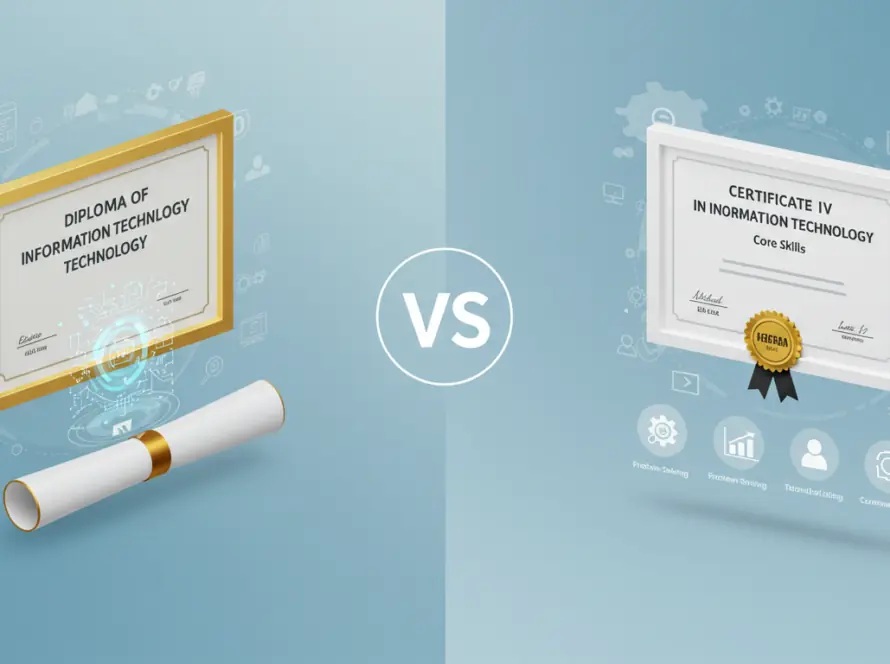
Diploma vs. Certificate IV in IT: How to Choose the Right IT Course?

difference between diploma vs. certificate iv in it

Feeling confused about which IT course is right for your career goals in the booming tech industry? Unsure whether the Diploma of IT or the Certificate IV in IT is the right fit for your career goals? You’re not alone. With the IT landscape evolving at such a fast pace, it can be challenging to know which qualification will best serve your career aspirations.

With an industry growing at a rapid pace, according to the Australian Government’s Job Outlook, IT professionals are in high demand, with jobs in areas like cybersecurity and network administration projected to grow by 12.6% over the next five years. On one hand, a diploma in IT provides a more in-depth and specialised skill set, preparing you for advanced roles, on the other hand a certificate iv in IT focuses on foundational knowledge, making it ideal for entry-level positions. 

That’s not all, in this article, we’ll explore the key differences between these two qualifications, helping you decide which one aligns best with your career goals. Whether you’re just starting or looking to elevate your IT skills, we’ve got you covered with a detailed comparison of the course content, career opportunities, and the right fit for your future.

What Is the Diploma in Information Technology (ICT50220)?

The Diploma of Information Technology (ICT50220) offers a more advanced qualification for those who want to pursue a broader range of specialised IT careers. This course is suitable for individuals aiming for leadership roles or looking to manage IT projects, networks, and security systems. This Diploma program provides a deeper understanding of IT systems, making it ideal for students who are committed to furthering their technical skills and career prospects.

Curriculum Overview

The Diploma of IT includes more specialised topics such as:

  • Originate and Develop Concepts: Learn how to generate and refine innovative IT solutions that align with business needs, fostering creative problem-solving in technological environments.
  • Promote Workplace Cybersecurity Awareness and Best Practices: Understand the latest cybersecurity threats and strategies to protect IT infrastructure while training employees to maintain a security-conscious workplace.
  • Lead and Facilitate a Team: Gain leadership and collaboration skills to manage IT teams effectively, ensuring productivity and smooth project execution.
  • Match ICT Needs with the Strategic Direction of the Organisation: Develop the ability to analyse business objectives and align IT systems with an organisation’s long-term goals.
  • Apply IP, Ethics, and Privacy Policies in ICT Environments: Learn how to navigate intellectual property laws, ethical IT practices, and privacy regulations to maintain compliance and data security.
  • Manage Client Problems: Enhance customer service skills by recognising, diagnosing, and resolving IT-related issues efficiently while maintaining strong client relationships.

With a stronger emphasis on leadership and specialised knowledge and skills, this specialisation prepares you for more technical roles in various industries.

Diploma Career Outcomes

Graduates of the Diploma of IT can pursue higher-level positions with a variety of career outcomes, such as:

  • Network Administrator
  • Network Operation Support
  • General Application Support Officer
  • Systems Analyst
  • Web Developer
  • IT Office Manager
  • Cybersecurity Specialist

Also Read: Benefits of Choosing Diploma of Information Technology Course 

Have questions about our IT programs? Reach out to us now! Our team is here to provide all the information you need about course details, fees, and career opportunities.

What is a Certificate IV in Information Technology (ICT40120)?

A Certificate IV in Australia is an AQF Level 4 vocational education qualification under the Australian Qualifications Framework (AQF). The Certificate IV in Information Technology (ICT40120) is a convenient and short course designed for those who want to enter the IT workforce quickly. This qualification will equip you with essential skills for supporting IT systems, network management, and providing technical support. It’s an excellent option for those looking to work in support roles, where you can directly assist end-users or companies with their IT systems.

Curriculum Overview

The Cert IV in IT provides foundational technical knowledge and practical skills required for entry-level IT roles. The curriculum covers:

  • Apply Advanced Critical Thinking to Work Processes – Develop problem-solving strategies to analyse and optimise IT workflows.
  • Contribute to Cybersecurity Risk Management – Learn essential cybersecurity principles to protect IT systems from threats.
  • Identify and Evaluate Emerging Technologies and Practices – Stay updated on the latest advancements in IT and how they impact businesses.
  • Work Collaboratively in the ICT Industry – Gain teamwork and communication skills to collaborate effectively in IT environments.
  • Comply with IP, Ethics, and Privacy Policies in ICT Environments – Understand and apply industry standards for data protection and ethical IT practices.
  • Apply Introductory Programming Techniques – Learn fundamental coding skills to develop basic applications and scripts.
  • Identify and Resolve Client ICT Problems – Develop troubleshooting techniques to diagnose and resolve common IT issues.

Certificate IV Career Outcomes

Graduates of the certificate IV in IT can pursue various entry-level qualifications in the industry, including:

  • Client Support Officer (ICT) – Provide technical assistance to customers and troubleshoot software or hardware issues.
  • Computer Technician – Install, maintain, and repair computer systems and peripherals.
  • Network Operations Technician – Assist in managing and monitoring IT networks and infrastructure.
  • Software Support Technician – Support end-users with software applications and resolve technical issues.
  • Technical Officer (ICT) – Handle basic IT system administration and support within an organisation.

This qualification is an excellent starting point for individuals looking to enter the IT field or progress to further studies, such as the Diploma of IT.

Key Differences: Diploma vs. Certificate IV in IT

Now that we’ve covered the curriculum and career outcomes of both courses let’s highlight the key differences between a Certificate IV and a Diploma in IT to help you determine which qualification best suits your goals.

FactorDiploma of ITCertificate IV in IT
Level of StudyAdvanced, in-depth knowledge across various IT domains.Entry-level, foundational IT skills for a broad range of roles.
Course DurationTypically takes 104 weeks to complete.Typically, takes 52 weeks to complete.
Curriculum DepthCovers a broader range of IT concepts, including cybersecurity, programming, and project management.Focuses on core IT skills such as support, networking, and customer service.
UnitsConsists of 6 core units and 13 elective unitsConsists of 7 core units and 13 elective units
Career OpportunitiesHigher-level roles such as network administrator, cybersecurity analyst, and web developer.Entry-level roles like IT support technician, help desk support, and network support specialist.
Course Fee (may vary)Enrolment Fee: $250
Material Fee: $400
Course Fee: $12,000
Enrolment Fee: $250
Material Fee: $600
Course Fee: $24,000
Salary PotentialHigher salary range, around $60,000 to $90,000 annually.Lower salary range, around $50,000 to $70,000 annually.
Pathway for Further StudyIdeal for those looking to pursue a Bachelor’s degree or specialised IT roles.A good starting point, with opportunities to move into a Diploma or degree later.

Is the Diploma of Information Technology Course Suitable for International Students?

Yes, the Diploma of Information Technology course is suitable for international students considering studying in Australia. We offer a supportive learning environment with a flexible curriculum designed to meet the needs of students from various backgrounds. The course provides essential IT skills, and international students can access the necessary visa options to study in Australia. Additionally, the college offers student services to help with accommodation, career advice, and student life, ensuring a smooth transition and successful study experience.

Still unsure? Book a free consultation with our expert advisors at Hillshire International College. Let us guide you in selecting the right IT course to match your aspirations and career path.

How to Choose the Right Course for You?

The best course, whether a certificate or diploma, for you depends on your goals, experience, and career aspirations. Consider these factors when making your decision:

Pursue a Certificate IV in IT if you:

✅ Are new to IT and want to build a solid foundation
✅ Prefer a shorter, entry-level course with practical skills and knowledge
✅ Want to start working in IT as soon as possible
✅ Plan to pursue further studies, such as a Diploma or Bachelor’s degree

Choose a Diploma of IT if you:

✅ Want to gain advanced IT knowledge and technical expertise
✅ Aim for mid-level IT roles with better salary prospects
✅ Are interested in specialised areas like cybersecurity or cloud computing
✅ Want a qualification that can lead to a university degree.

Final Thoughts

Both the Certificate IV and Diploma in IT can help you start or advance your career in the tech industry. If you’re unsure, consider your long-term goals, current skills, and study preferences. Regardless of the path you choose, a career in IT is filled with opportunities, innovation, and exciting challenges!

Ready to take the next step? Explore our Certificate IV in IT and Diploma of IT programs at Hillshire International College and start your journey towards a rewarding IT career today!

Benefits of Choosing Diploma of Information Technology Course

Benefits of Choosing Diploma of Information Technology Course in Australia

Are you ready to unlock a world of career opportunities in the fast-paced IT industry? 

Pursuing a career in Information Technology opens doors to endless opportunities. At Hillshire International College, we pride ourselves on delivering exceptional IT education that prepares students for success in the global technology sector. Our institution has built a strong reputation for academic excellence, industry-relevant training, and student support, making it an ideal choice for aspiring IT professionals looking to obtain a diploma in Information Technology.

This blog explores how obtaining an ICT50220 Diploma of Information Technology in Australia can set you on the path to success. Learn about the practical skills you’ll gain, the flexible learning options available and the high demand for IT professionals globally. Whether you’re just starting your career or looking to upskill, this diploma is your gateway to a brighter future. 

Why Pursue an ICT50220 Diploma of Information Technology in Australia?

Practical Learning Approach

The ICT50220 Diploma of Information Technology in Australia emphasises hands-on, practical learning that goes beyond theoretical knowledge. Our Information Technology course ensures that you develop both technical skills and problem-solving abilities, equipping you with a solid foundation for your career. This approach includes:

  • Industry-based projects that simulate real-world scenarios and challenges
  • Dedicated computer laboratories equipped with the latest software and hardware
  • Regular workshops and practical sessions led by industry professionals
  • Collaborative team projects that mirror workplace environments
  • Hands-on experience with current industry tools and technologies
  • Technical workshops focusing on programming, networking, and system administration
  • Development of problem-solving skills through real-case scenarios
  • Regular assessments based on practical applications rather than just theory

Join Hillshire International College’s Information Technology program today. Learn from industry experts and gain the skills you need to succeed. Schedule a session with us to learn more!

Various Career Options

The beauty of an IT diploma lies in its versatility. Think of it as holding a master key that unlocks numerous career opportunities. From becoming a cybersecurity specialist protecting organisations against digital threats to developing cutting-edge mobile applications that millions might use daily, your career path can take many exciting turns.

You might find yourself designing intuitive user interfaces, managing complex database systems, or even pioneering cloud solutions for major corporations. The skills you gain are transferable across industries – whether you’re passionate about healthcare, finance, entertainment, or environmental conservation, there’s a place for IT expertise in every sector. These specialisation options in IT allow you to tailor your career path to suit your interests and skills.

High Demand in the IT Sector

In today’s digital age, IT professionals aren’t just in demand – they’re essential. Companies are racing to digitise their operations, implement artificial intelligence, and secure their digital assets, creating an insatiable appetite for IT talent. Recent industry reports show that IT job postings are growing three times faster than overall job markets.

Organisations aren’t just looking for employees; they’re actively competing for skilled IT professionals, often offering attractive compensation packages, work-life balance, and continuous learning opportunities. This surge in demand isn’t a temporary trend – it’s the new normal in our increasingly connected world.

Job Security

Nowadays, many traditional roles are being automated; IT careers stand as bastions of job security. Think about it – who creates and maintains the automation systems? Who ensures data security? Who develops the next breakthrough application? IT professionals are the architects of digital transformation, making their roles not just secure but increasingly crucial. The dynamic nature of technology means your skills will always be relevant, especially as you continue to learn and adapt. It’s not just about having a job; it’s about being part of an industry that shapes the future.

Looking for a flexible learning option in IT? Hillshire International College offers a Diploma in Information Technology with secured job options. Contact us to enrol!

Faculty Excellence

Behind every successful IT professional stands a mentor who sparked their passion for technology. Our faculty members aren’t just teachers – they’re industry veterans who bring real-world experience into the classroom. They share war stories from their time in Silicon Valley, demonstrate problem-solving techniques they’ve used in major projects, and maintain active connections with industry leaders.

Their expertise goes beyond textbook knowledge; they provide insights into industry trends, professional networking opportunities, and personalised guidance for your career journey. Learning from professionals who have walked the path you’re about to embark on adds an invaluable dimension to your education.

Gateway to Higher Education

Your IT diploma isn’t just an end goal – it’s a powerful stepping stone. Many of our graduates use this qualification as a launch pad for further education, seamlessly transitioning into bachelor’s degrees or specialised certifications. Pursuing a diploma in information technology can help you earn higher qualifications, potentially reducing the time and cost of future studies. Whether you choose to dive straight into the workforce or pursue further education, your diploma degree in Information Technology provides a solid foundation of knowledge and skills that will serve you well. The pathways are flexible, allowing you to adapt your educational journey to your evolving career aspirations. 

Skill Development

The ICT50220 Diploma of Information Technology at Hillshire International College offers a complete approach to skill development, ensuring that you gain not only technical expertise but also the soft skills essential for success in the IT industry. Throughout the course, you’ll build a well-rounded skill set that includes technical skills, communication skills, problem-solving abilities, teamwork, and collaboration.

This well-rounded approach to education ensures that you are not just technically proficient but also well-prepared for the collaborative, dynamic nature of the IT industry.

Global Recognition of Australian Qualifications

Australian qualifications hold significant weight in the global job market. The Australian Qualifications Framework (AQF) ensures that qualifications from Australian institutions are recognised globally, opening doors tocareer opportunities in countries around the world.

As industries across the globe continue to rely on information technology, an Australian qualification ensures that you will be equipped with the skills needed to succeed in an increasingly connected world.

Enrol Today and Start Your IT Journey

Choosing to pursue a Diploma of Information Technology at Hillshire International College is an investment in your future. With our industry-aligned curriculum, experienced faculty, and practical learning approach, we provide the perfect environment for you to grow your technical skills and become an IT professional ready to thrive in the global marketplace.

Contact us today to learn more about how our Information Technology program can help you achieve your career aspirations. 

Don’t just dream about a career in technology – make it happen at Hillshire International College. Enrol now!